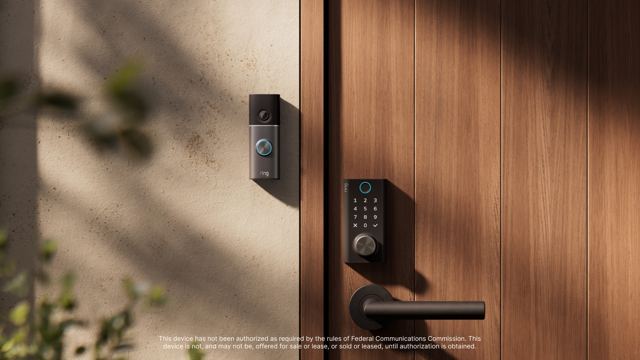
Ring's first smart lock can be hand-cranked when its battery dies
Ring's first smart lock has a hand crank for when the battery runs out, tackling the fear of being locked out.
NEXTMADE EDITORIAL DIGEST
The story
Ring's first smart lock has a hand crank for when the battery runs out, tackling the fear of being locked out.
Why it matters
The hand crank is more than a backup feature. It acknowledges that connected hardware needs a graceful failure mode before people will let it control a front door.
Home hardware has to survive many users, changing routines and inevitable failures. The best connected products make their useful path obvious and their fallback path reassuring.
What this changes
For home builders, the next useful proof point is not an announcement. It is a repeatable moment where the product works for a real person, in a real setting, with its trade-offs made clear.
Key signals
- How the mechanical fallback works under stress
- Installation and compatibility with existing doors
- A clear path through battery and connectivity failures
The NEXTMADE view
We will keep tracking this through the lens of what gets built, tested and adopted next. A product is more interesting when its real-world behaviour becomes clearer than its launch narrative.
Source: TechCrunch. This is an original NEXTMADE editorial article, written from independently phrased analysis and public reporting; it does not reproduce source article text or media.